A practical guide for engineers deciding how to manufacture rotational parts with threads, bores and non-axisymmetric features.
Key takeaways
Standard turning is efficient when most features share the spindle axis.
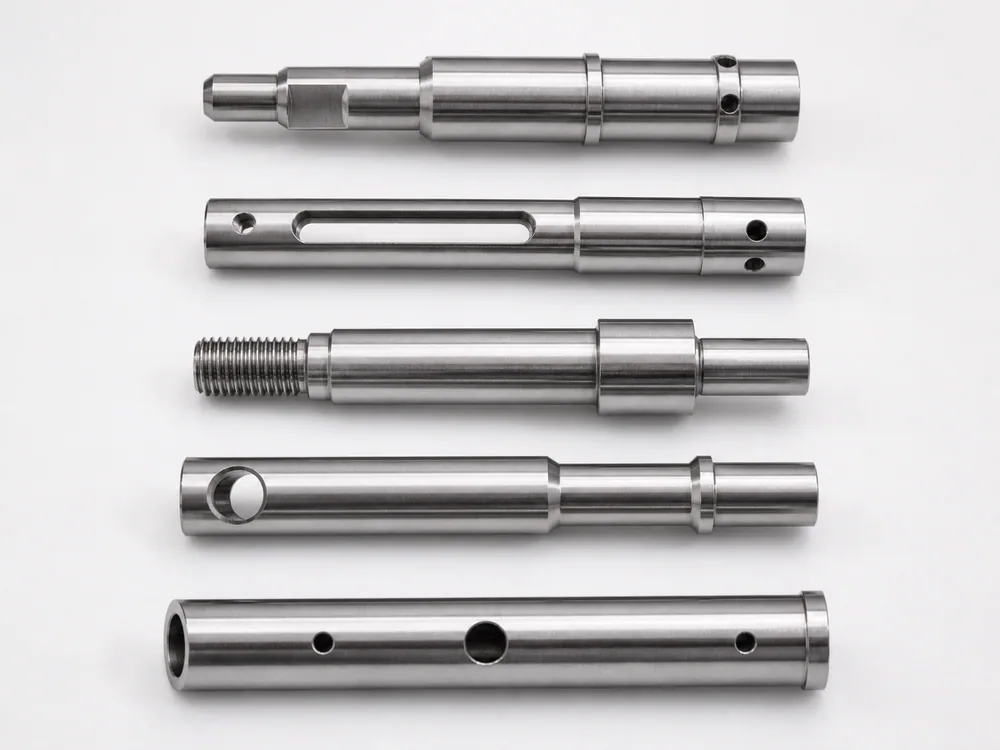
Turn-milling is useful when rotational parts also need flats, cross-holes, slots or windows.
Tolerance relationships and inspection access should influence the process choice.
01
Start with the geometry, not the machine name
CNC turning rotates the workpiece while a cutting tool forms diameters, tapers, grooves, threads and bores. It is usually the natural starting point for parts dominated by concentric features.
Turn-milling adds driven tools or coordinated milling operations so the same component can receive non-axisymmetric features. The right choice depends on feature relationships, access, workholding and production needs—not on choosing the most complex machine available.
02
When standard CNC turning is usually enough
Turning is often appropriate for shafts, bushings, plugs, sleeves and fittings where external and internal features remain rotationally symmetric.
- Outside and inside diameters
- Faces, shoulders and grooves
- Internal or external threads
- Axial drilling and boring
- Chamfers and simple tapers
03
When turn-milling becomes valuable
Consider a combined approach when a turned component also contains features that must be positioned relative to the turned datums.
- Cross-holes or radial ports
- Milled flats and wrench features
- Slots, keyways or windows
- Off-axis holes
- Features distributed around the circumference
04
Tolerance and setup considerations
Fewer setups can improve relationships between features, but they do not automatically guarantee every tolerance. Tool access, part rigidity, heat, workholding and inspection strategy still matter.
Call out functional datums and critical relationships clearly. Avoid applying a tight general tolerance to every dimension when only a few features drive performance.
05
What to include in the RFQ
Send the current 3D model and controlled 2D drawing. Add material, quantity, thread specifications, surface finish, target timing and any inspection documentation required.
A complete RFQ allows the supplier to compare a simple turning route, a turning-plus-secondary-operation route and a consolidated turn-milling approach before quoting.

Julie Cai
Project contact connecting international customers with MIM Precision's manufacturing and engineering review team.
Contact Julie